

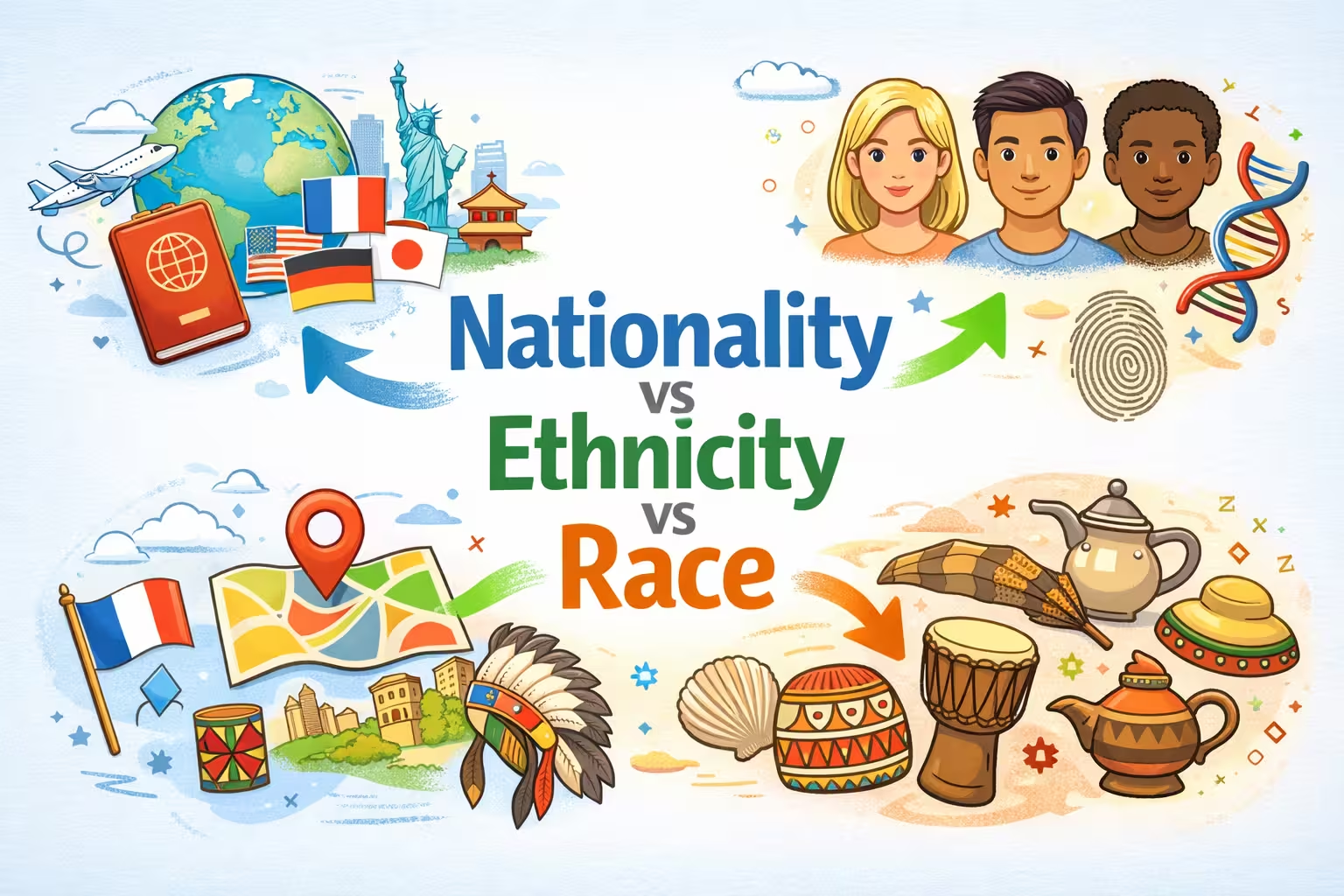
Understanding the difference between nationality vs ethnicity vs race is a common problem for many people, especially when filling out forms, reading population data, or trying to describe personal identity. These terms are often used as if they mean the same thing, but they describe very different aspects of who a person is. Confusion usually starts because identity definitions mix legal status, cultural background, and physical appearance in everyday language. This article explains these ideas in clear terms so readers can make sense of how people identify themselves and how governments, researchers, and institutions use these categories. You will learn how nationality, ethnicity, and race differ, why race is seen as a social construct, and why these distinctions matter in real life, including social statistics and personal identity discussions.
Definitions: Race, Ethnicity, and Nationality Explored
Before comparing these terms, it is important to understand what each one means on its own. Race, ethnicity, and nationality developed in different historical and social contexts, and each serves a specific purpose. Race focuses on perceived physical traits, ethnicity reflects shared culture and ancestry, and nationality refers to a legal bond with a country. Problems arise when these categories are blended together without clarity. Clear definitions help explain census data, migration patterns, and cultural identity without confusion. In this section, each concept is explained separately with real-world examples, making it easier to see why one person may belong to multiple ethnic groups, have one nationality, and still be classified under a broad racial category. This clarity also helps avoid common myths linked to identity labels.
What Is Race?
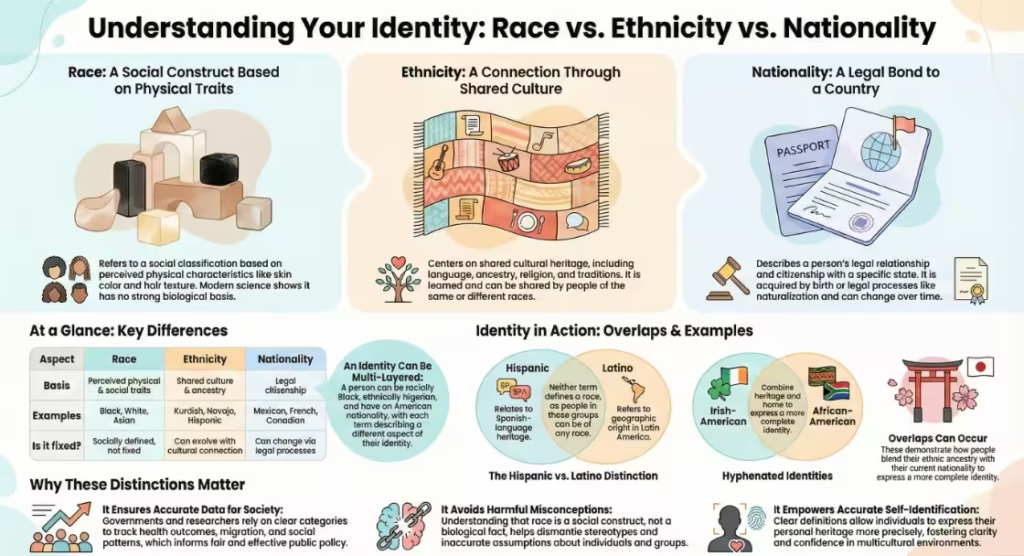
The race definition usually refers to a social classification based on physical traits such as skin color, facial features, and hair texture. These traits are visible, which is why societies historically used them to group people. Modern science shows that race has no strong biological basis, as genetic differences within so-called racial groups are often greater than differences between them. This is why race is widely described as a social construct rather than a biological fact. Racial categorization changes across countries and time periods, reflecting social values rather than genetics. Today, race is still used in health studies, population data, and civil rights discussions, but many experts stress that it should be understood as a social label shaped by history, power, and perception.
What Is Ethnicity?
The ethnicity definition centers on shared cultural heritage rather than physical traits. Ethnicity includes language, traditions, history, religion, and ancestry that connect people as a group. Unlike race, ethnicity can be learned, maintained, or even changed through upbringing and cultural connection. For example, groups such as Hispanic, Arab, Han Chinese, or Navajo are considered ethnic identities because they share cultural practices and historical roots. A person can belong to more than one ethnic group, especially in families with mixed backgrounds. Ethnicity differs from race because it focuses on lived culture rather than appearance. Understanding ethnic identity helps explain why people with the same race may have very different traditions, values, and social experiences across regions.
What Is Nationality?
Nationality is a legal concept that describes a person’s formal relationship with a country. The nationality definition is tied to citizenship, legal rights, and responsibilities under a specific state. Nationality may be gained by birth, naturalization, or descent, depending on a country’s laws. It is often confused with national origin, which refers to where a person or their ancestors come from. Citizenship and nationality are closely linked, but some countries use the terms differently. For example, someone can be American, Brazilian, or Canadian by nationality regardless of their race or ethnicity. Nationality can change over time through legal processes, which makes it different from race and ethnicity, which are shaped by culture and social identity.
Nationality vs Ethnicity vs Race: Key Differences
The differences between these three terms become clearer when they are compared side by side. Race is based on socially perceived physical traits, ethnicity reflects cultural background and ancestry, and nationality is defined by legal citizenship. These distinctions explain why a person can be racially Black, ethnically Nigerian, and nationally American at the same time. Understanding these differences is essential for reading demographic data and avoiding inaccurate assumptions. Governments and researchers rely on clear categories to study health outcomes, migration trends, and social patterns. Mixing these terms can lead to misunderstandings about identity and representation. The table below summarizes the core differences and helps clarify how each concept functions in everyday and official contexts.
Comparison Table: Race, Ethnicity, and Nationality
| Aspect | Race | Ethnicity | Nationality |
| Basis | Physical and social traits | Culture and ancestry | Legal citizenship |
| Examples | Black, White, Asian | Kurdish, Navajo, Hispanic | Mexican, French |
| Fixed? | No | Can evolve | Legal status |
This table highlights how race, ethnicity, and nationality operate independently. Race relies on visible traits shaped by society, ethnicity connects people through shared culture, and nationality defines legal belonging to a nation. Seeing them side by side helps explain why identity is layered rather than singular.
When These Race, Ethnicity, and Nationality Overlap
Although race, ethnicity, and nationality are distinct, they often overlap in daily life. In some cases, ethnicity and nationality share the same label, such as Japanese, where cultural identity and national citizenship align for many people. Racial categories also vary by region, meaning someone classified as one race in one country may be labeled differently elsewhere. Hyphenated identities like Irish American or African American show how people combine ancestry with nationality to reflect personal history. These overlaps add depth to cultural identity and allow people to express more than one connection at once. Understanding overlap helps explain why identity cannot be reduced to a single label and why multiple categories are often needed.
Why People Confuse These Concepts
Confusion happens because race, ethnicity, and nationality are often used loosely in conversation and media. Forms, surveys, and official documents may group them together, reinforcing misunderstanding. Historical usage also plays a role, as older systems treated race as biology and nationality as culture. Today, global migration and multicultural societies add more layers to identity. Without clear explanations, people may assume nationality defines culture or that race determines heritage. This confusion affects social discussions, policy debates, and even personal relationships. Learning the correct meaning of each term helps promote accurate communication and respect for how individuals define themselves across different contexts and cultures.
Common Misconceptions About Race, Ethnicity, and Nationality
One common myth is that race is biological, when it is actually shaped by social perception. Another misunderstanding is believing ethnicity and nationality are the same, even though one reflects culture and the other reflects legal status. Some people also assume nationality defines culture, ignoring the diversity within nations. These misconceptions can lead to stereotypes and inaccurate conclusions about individuals or groups. Clarifying these points helps people understand identity more accurately and reduces harmful assumptions. Clear definitions also support better data collection and interpretation in education, health, and social research, where accurate identity categories are essential for meaningful analysis.
Examples That Clarify the Difference
Real-life examples make these distinctions easier to understand. A person born in the United States to Nigerian parents has American nationality, Nigerian ethnicity, and is commonly classified as Black by race. Each label describes a different part of identity. Another example is Hispanic versus Latino in the United States. Hispanic relates to Spanish language and cultural heritage, while Latino refers to geographic origin in Latin America. Neither term defines race, as people within these groups can belong to different racial categories. These examples show why using the correct term matters and how identity is shaped by law, culture, and social perception rather than a single factor.
How These Terms Matter in Real Life
The difference between nationality, ethnicity, and race is not just academic; it affects how people understand themselves and how societies function. Identity importance shows up in daily life, from how individuals describe their background to how institutions record information. When people clearly understand these terms, they can express their heritage more accurately and avoid confusion or mislabeling. These concepts also shape discussions about inclusion, representation, and social equity. Inaccurate use can lead to misunderstandings or unfair assumptions, especially in diverse societies. Clear definitions support respectful communication and help people recognize that identity has multiple layers. Knowing where race, ethnicity, and nationality apply makes personal reflection easier and improves how identity-related data is interpreted and used.
Identity and Self-Identification
Understanding personal heritage plays a major role in self-identification. Many people reflect on their background to better understand family history, cultural values, and social belonging. In census and data collection, clear identity definitions help governments and organizations gather accurate information about populations. This data guides public services, education planning, and health research. In social science research, correct use of race, ethnicity, and nationality allows researchers to study trends without blending unrelated categories. For individuals, self-identification also supports confidence and clarity, especially in multicultural environments. When people understand these terms, they can describe themselves in ways that reflect both personal experience and social reality, rather than relying on vague or misleading labels.
Role in Demographic and Cultural Studies
Governments rely on clear identity categories to understand population needs and changes. Race and ethnicity data help track health outcomes, education access, and economic patterns across groups. These demographic data differences reveal where support or policy changes may be needed. Nationality is important in legal contexts because it defines rights such as voting, residency, and access to public services. Cultural studies also depend on these distinctions to examine migration, integration, and cultural exchange. When race, ethnicity, and nationality are confused, data becomes less useful and conclusions may be flawed. Clear definitions improve accuracy, fairness, and transparency in research and policy decisions that affect real communities.
How People Explore Their Ethnic Identity
Many people want to understand their ethnic roots beyond simple labels like race or nationality. Family stories, migration history, and cultural traditions often raise questions about mixed heritage. This curiosity leads people to explore ancestry in practical ways. Tools like an Ethnicity Percentage Calculator help users estimate how different ancestral backgrounds contribute to their identity based on known family information. The calculator on CalcViva offers a simple way to break down heritage into clear percentages, such as European, Asian, African, or Indigenous roots. While it is not a DNA test, it supports personal reflection and learning by turning family history into an easy-to-understand overview.
FAQs: Nationality, Ethnicity, and Race
Can someone have multiple ethnicities?
Yes, a person can belong to more than one ethnicity, especially if their parents or grandparents come from different cultural backgrounds.
Is race the same as ethnicity?
No, race relates to social perceptions of physical traits, while ethnicity is based on shared culture, ancestry, and traditions.
Can nationality change over time?
Yes, nationality can change through naturalization, dual citizenship, or legal status updates.
Is ethnicity determined by DNA?
Ethnicity is influenced by ancestry, but it is mainly defined by cultural connection, not genetics alone.
How do people identify in multicultural societies?
Many people use multiple labels, combining race, ethnicity, and nationality to reflect their full background.
Suggestions: Understanding Identity in a Complex World
Nationality, ethnicity, and race each describe different parts of human identity. Race reflects social views of physical traits, ethnicity represents cultural heritage, and nationality defines legal belonging to a country. Understanding these differences helps people communicate clearly, respect diversity, and interpret demographic data correctly. Using these terms carefully reduces stereotypes and supports accurate representation in research and public discussion. Personal tools like ethnicity calculators can support self-exploration, but they should be used as learning aids rather than scientific proof. By applying these concepts thoughtfully, individuals and institutions can better recognize the many ways identity is formed and expressed in modern societies.