

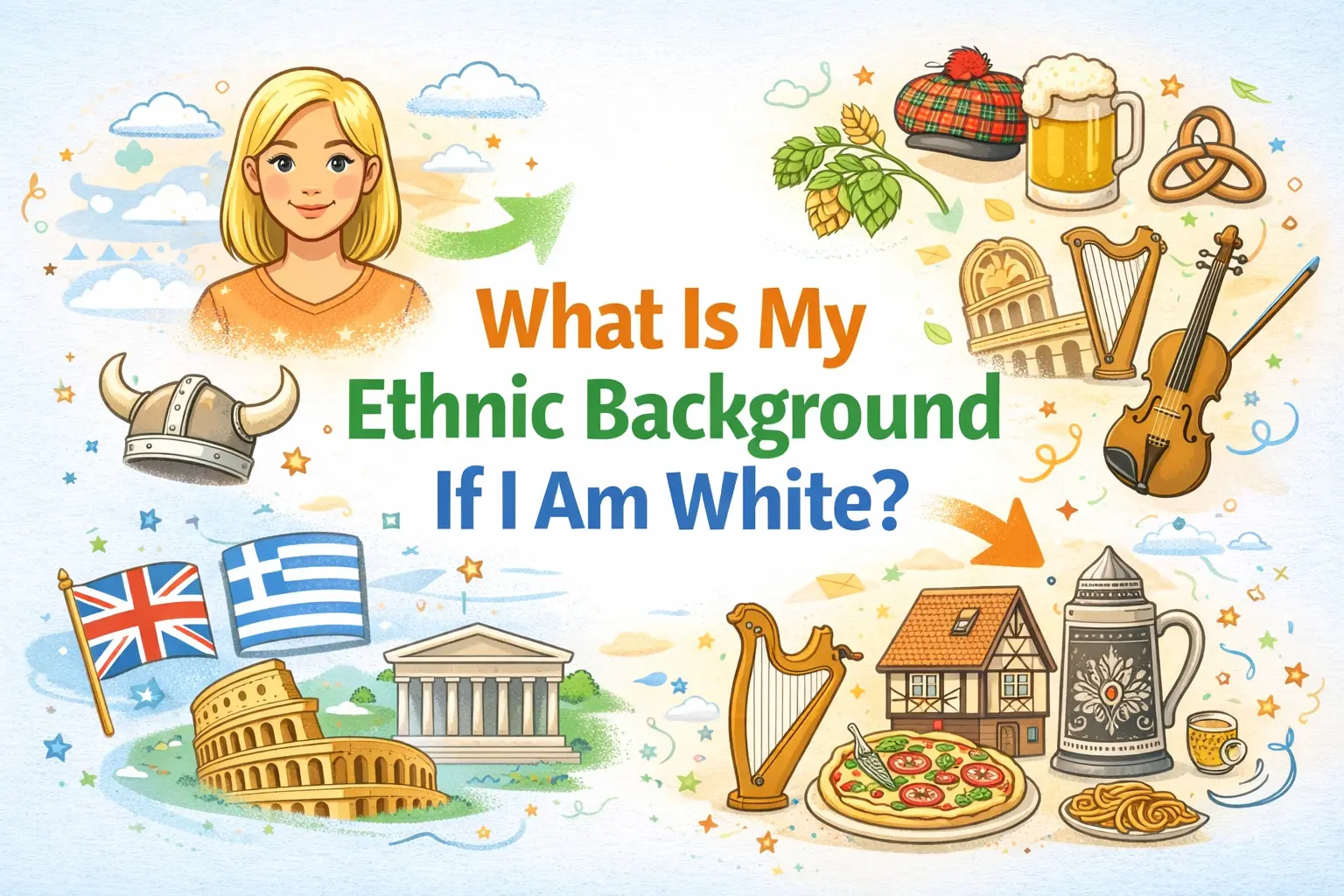
Many people ask what is my ethnic background if I am white because the label “white” often feels incomplete. It appears on forms, surveys, and official records, yet it does not explain family history, traditions, or cultural roots. This leads to confusion about white identity and how it connects to ancestry. In this section, readers will learn why “white” is a racial term rather than an ethnic one, how ethnicity differs from race and ancestry, and why understanding white ethnic background meaning can add depth to personal identity. For many individuals, exploring ethnic backgrounds brings clarity about migration history, cultural customs, and family stories that a broad racial label cannot explain on its own.
Table of Contents
What Does “White” Mean in Racial and Demographic Terms
In racial and demographic systems, “white” is used as a broad category to group people based on social perceptions of appearance rather than culture or heritage. Governments and institutions rely on racial labels to track population trends, but these labels are simplified by design. The white racial classification does not describe language, traditions, or national origin. Instead, it serves as a general grouping within census and social data. Understanding how “white” is defined helps explain why so many people feel it does not answer questions about who they are or where their families come from. This gap between official labels and personal identity is what drives curiosity about deeper ethnic roots.
Race vs Ethnicity vs Ancestry
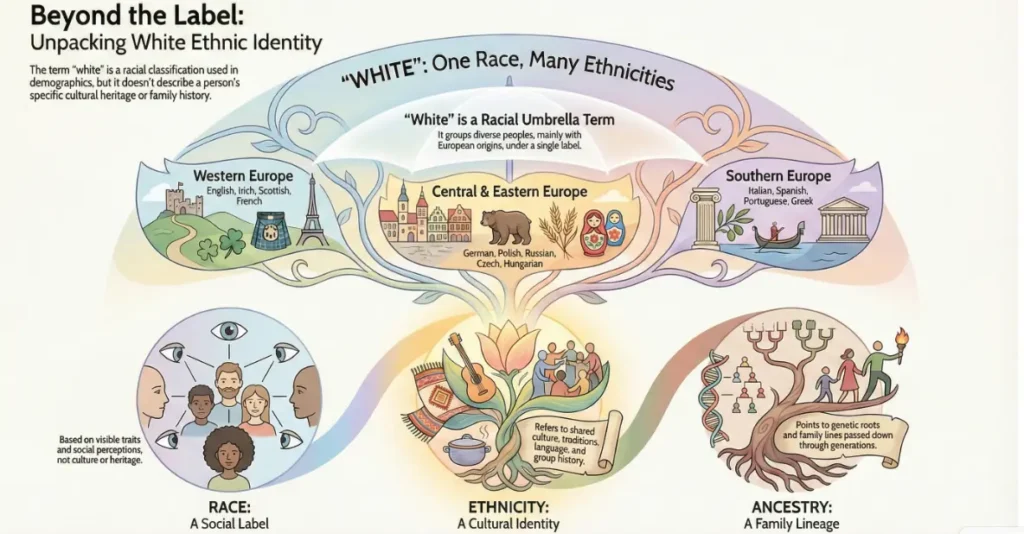
The difference between race, ethnicity, and ancestry is central to understanding white identity. Race is a social label based on visible traits and historical classification systems. Ethnicity refers to shared culture, traditions, language, and group history. Ancestry points to family lineage and genetic roots passed down through generations. “White” fits into race, not ethnicity. Census systems often list white as a racial option while collecting ethnicity or national origin separately. This structure shows that race vs ethnicity vs ancestry serve different purposes. Knowing this distinction helps people see why being labeled white does not define cultural background or family origin in a meaningful way.
Why “White” Isn’t a Single Ethnic Group
People classified as white come from many different ethnic backgrounds, which is why white is not a single ethnic group. Someone labeled white may have Irish, Italian, Polish, German, or Greek roots, each with distinct histories and traditions. Large waves of immigration shaped white ethnic diversity, especially in countries like the United States, Canada, and Australia. Over time, these groups were grouped under one racial label despite cultural differences. This blending explains why white identity often feels vague. Recognizing European ethnic heritage shows that white populations are culturally diverse, even if they are grouped together for demographic convenience.
What Ethnic Groups Commonly Fall Under “White”
White is best understood as an umbrella term that includes many ethnic identities, mainly linked to European and some Western Asian origins. These identities developed over centuries through migration, language, and shared traditions. While grouped together racially, each ethnic group has its own customs, food, history, and social patterns. Understanding white ancestry means looking beyond the label and identifying specific regional roots. This approach helps people connect with meaningful parts of their background rather than relying on a broad category that hides cultural detail. Breaking white identity into ethnic groups brings clarity and supports a more accurate understanding of heritage.
Major White Ethnic Backgrounds
Major white ethnic backgrounds are often grouped by European regions. Western European origins include English, Irish, Scottish, and French heritage. Central and Eastern Europe includes German, Polish, Czech, and Russian roots shaped by different historical paths. Southern Europe reflects Italian, Greek, and Spanish cultures with strong regional traditions. Other backgrounds include Scandinavian and Balkan heritage, each with unique languages and customs. These groups form the foundation of white ancestry in many countries today. Recognizing these European ethnic groups helps people see how varied white identity truly is and why ethnic background cannot be defined by race alone.
| Region | Typical Ethnic Backgrounds |
| Western Europe | English, Irish, Scottish, French |
| Central Europe | German, Polish, Hungarian, Czech |
| Southern Europe | Italian, Spanish, Portuguese, Greek |
| Eastern Europe | Russian, Ukrainian, Bulgarian, Romanian |
How Census and Official Data Treat Ethnicity
Census systems often separate race from ethnicity or national origin to capture more detailed information. In the United States, people may select “White” as a race and then report ancestry such as Irish or German. In the United Kingdom, white ethnic groups are divided into categories like White British, White Irish, or Other White. This method shows that ethnicity in census data is more specific than race. These systems acknowledge that white ethnic groups are not the same and help governments understand cultural diversity within racial categories. This approach supports clearer data and reflects real differences in background.
Why People Ask “What Is My Ethnic Background If I Am White?”
This question arises because “white” does not describe specific roots or cultural history. Many people want to know where their families originated, what traditions shaped them, and how migration influenced their identity. Mixed inheritance adds another layer, as families often include multiple European backgrounds. Over generations, stories may fade, leaving people curious about their past. The meaning of white background becomes unclear without ethnic context. Asking about ethnic background helps people move beyond a racial label and gain insight into heritage, culture, and ancestry that feel more personal and informative.
Exploring Your Ethnic Roots As a White Person
Exploring ethnic roots as a white person often begins with simple but meaningful questions like how do I know my ethnicity, what race am I, or how can I tell what race I am. These questions reflect a desire to move beyond a general racial label and understand personal background in more detail. White identity covers many possible origins, so discovering ethnicity usually requires looking at family history, migration patterns, and cultural traditions. Many people find that their background includes several regions rather than a single source. This process supports ancestry discovery and helps explain why identity can feel layered. Exploring ethnic roots is less about changing who you are and more about understanding where your family’s story fits within broader historical movement.
Family History and Self-Discovery
Family history is often the most accessible way to explore ethnic roots. Conversations with relatives, old photographs, birth records, and immigration documents can reveal valuable details about ancestry. Many people discover they have mixed backgrounds, such as Italian roots combined with Irish and German heritage. This explains why questions like how to know your ethnic background or how can you tell your ethnicity are common. Family stories also provide cultural context that records alone cannot capture. Traditions, food, and customs passed down through generations help shape identity. Exploring these elements supports ancestry discovery and offers a clearer picture of ethnic background than racial labels alone. This process encourages reflection and helps people connect with their personal history in meaningful ways.
Genetic Origin vs Cultural Identity
It is important to understand the difference between genetic origin and cultural identity. Genealogical DNA tests can estimate genetic percentages and answer questions like am I mixed race test or how to know my race from a biological angle. However, ethnicity is not defined by DNA alone. Cultural heritage comes from shared traditions, language, values, and family upbringing. A person may have genetic ties to several regions but identify strongly with one culture due to lived experience. This distinction explains why DNA ancestry vs ethnicity are not the same. Genetics provides clues, while culture shapes identity. Recognizing this difference helps people interpret results wisely and understand ethnicity as more than numbers.
How Tools Can Help Estimate Mixed Heritage
Many people asking what is my ethnic background if I am white want practical ways to break down their heritage beyond a broad racial label. Tools such as an ethnicity calculator help translate family history into clearer insights. The Ethnicity Percentage Calculator from CalcViva acts as an ancestry mix estimator by organizing known heritage into estimated percentages. Users can explore heritage breakdowns such as European, Scandinavian, or Mediterranean roots based on family information. While it is not a genetic test, it supports learning and reflection. This approach is helpful for people exploring how to find out your ethnicity or how to determine your ethnicity in an accessible way.
FAQs About White Ethnic Background
Can a white person have multiple ethnic backgrounds?
Yes, many white individuals have more than one ethnic background. Historical migration, intermarriage, and mixed ancestry mean families often include several European origins. This explains why questions like how can you tell your ethnic background are common. Multiple ethnicities can exist within one family line, shaping traditions and identity over time.
Does being white mean you are of European ancestry?
In many contexts, white racial classification is linked to European ancestry, but it is still a broad category. It does not specify which region or culture. Asking what race are u or what race am I often leads people to explore deeper ancestry for clearer answers.
Is “white” the same as an ethnic heritage?
No, white is a racial label, not an ethnic heritage. Ethnicity reflects culture and ancestry, while race is a social category. This distinction helps explain white ethnic background meaning and why race alone cannot describe family origins.
Can your ethnic background change over time?
Ethnic background itself does not change, but understanding of it can improve. As people learn more about ancestry and culture, identity may feel clearer. This answers questions like how do I know my ethnicity more accurately.
How do I find my specific ethnic roots?
You can explore records, family stories, and heritage tools to find ethnic roots. This process supports those asking how to find your nationality or how to know your ethnic background through research and reflection.
Suggestions: Understanding White Ethnicity and Identity
White is a broad race category that does not describe specific cultural or ancestral roots. Ethnic background is more detailed and varies widely among individuals labeled white. Understanding ethnicity vs race helps answer questions like how can I tell what race I am and how to find out your ethnicity with greater clarity. Exploring heritage supports white heritage insight and strengthens personal identity through knowledge rather than assumptions. Tools like the Ethnicity Percentage Calculator can support learning by organizing family history into understandable estimates, but they should be seen as guides rather than scientific proof. Understanding identity through ancestry, culture, and history offers a richer perspective than race alone.