

Many men quietly struggle with doubts about their penis size, often comparing themselves with exaggerated images online or unrealistic cultural standards. This constant worry fuels anxiety, body image issues, and even relationship strain. The truth, however, is that most of what men believe about penis size comes from myths, misinformation, and misleading sources. This CalViva Team’s article explores the real facts behind those myths, explains how to measure accurately, and highlights why understanding the truth is vital for mental and sexual well-being. By addressing these false beliefs, men can build healthier confidence, improve relationships, and focus on the aspects that truly matter for satisfaction and intimacy.
The psychological and emotional impact of penis-size anxiety (body image, confidence)
Penis-size anxiety affects millions of men globally, often leading to low self-esteem, performance anxiety, and depression. Many men overestimate what is “normal,” causing unnecessary stress and avoidance of intimacy. This condition, sometimes referred to as small penis syndrome or penile dysmorphic disorder, is a form of body image concern similar to other appearance-related insecurities. Studies show that men who fixate on size may experience higher rates of erectile dysfunction and reduced satisfaction with their bodies. This constant worry can damage confidence and relationships, even though medical research confirms that most men fall within a completely normal range. Addressing these anxieties with accurate information is essential to improve self-image and emotional health.
How cultural, media and pornography influences the “ideal size” narrative
Media, movies, and especially pornography have shaped unrealistic ideas about what a “normal” penis looks like. Adult content often exaggerates proportions, creating false standards that influence men and women alike. These repeated portrayals convince viewers that bigger always means better, even though that belief isn’t supported by real-life sexual satisfaction studies. Many men unconsciously compare themselves with performers who represent less than 1% of the population. Culturally, male virility has been tied to size for centuries, symbolizing power and masculinity. This constant exposure reinforces myths, creating unnecessary pressure and insecurities. Understanding how media distorts expectations helps individuals separate entertainment from reality, leading to healthier self-perception and sexual confidence.
What the research says about average penis size (and how it differs from perception)
Scientific research consistently shows that the average erect penis length falls between 5.1 to 5.5 inches (13–14 cm), according to data from The Turek Clinic, Medical News Today, and Wikipedia. Despite this, surveys reveal that many men underestimate themselves and believe they are below average. In reality, very few men have a size significantly smaller or larger than the norm. Studies also show that most women report satisfaction with their partner’s size and prioritize factors such as connection, arousal, and trust over measurements. The gap between perception and reality highlights how myths and comparisons fuel anxiety. Understanding true averages can greatly reduce self-doubt and help men accept their natural anatomy with confidence.
How debunking myths supports better sexual health, relationship intimacy and realistic expectations
Dispelling penis-size myths helps men shift focus from comparison to connection. When men stop worrying about measurements, they can concentrate on emotional intimacy, communication, and pleasure, all of which play far greater roles in satisfaction. Debunking false beliefs also improves relationship dynamics, as partners feel more secure and open about discussing desires. Accurate knowledge empowers individuals to recognize when issues are medical rather than psychological, encouraging timely consultation with healthcare providers. Ultimately, understanding the truth about penis size promotes healthier sexual attitudes, reduces anxiety, and fosters stronger emotional bonds. In a society obsessed with physical ideals, separating fact from fiction leads to more confident and fulfilling relationships.
How to Measure Penis Size Properly (and Why Many Measurements Are Misleading)
Flaccid vs erect vs stretched measurement – what’s the difference
Penis size varies depending on its state, flaccid, stretched, or erect, and each tells a slightly different story. The flaccid length changes with temperature, mood, or stress, making it unreliable for comparison. The stretched length, measured by gently pulling the penis to full extension, closely predicts the erect length. The erect length, taken when fully aroused, provides the most accurate assessment for studies. These differences explain why many men underestimate themselves after seeing misleading flaccid comparisons. Knowing which measurement to use helps ensure realistic expectations. Medical experts often rely on stretched or erect measurements for accuracy, as flaccid size can vary by several centimeters depending on external factors.
Standard measurement method (base to tip, press the fat pad, tape vs visual)
For an accurate measurement, consistency and proper technique are essential. The correct way is to press a ruler or measuring tape firmly against the pubic bone at the base of the penis, compressing the fat pad to ensure true length. Measure along the top side to the tip of the glans, excluding any foreskin overhang. Always measure when fully erect for accuracy, and avoid rounding up or down. The girth, or circumference, is best measured around the thickest part of the shaft using a flexible tape. Visual estimation often leads to over- or under-measurement, so physical measurement with proper tools is key. Following this standardized method avoids confusion and gives a more realistic understanding of true size.
Why self-reporting studies are often exaggerated
Many penis size studies rely on self-reporting, which often leads to inflated results. Men tend to overestimate when measuring themselves or report what they believe is more socially acceptable. In contrast, research conducted by medical professionals using standardized tools shows consistently smaller, yet accurate, averages. For instance, self-reported studies have found mean lengths of around 6.2 inches, while clinical measurements typically report averages closer to 5.1–5.5 inches. This difference highlights how pride, perception, and measurement errors can distort data. Misleading statistics then reinforce unrealistic expectations for others, creating a cycle of comparison and insecurity. Reliable research should always come from professional, controlled studies rather than self-assessments.
Why focusing on measurement alone misses the bigger picture (function, satisfaction, health)
Focusing only on penis size distracts from the more important factors that define sexual health and satisfaction. Sexual performance depends on blood flow, stamina, communication, and mutual comfort, none of which are determined by inches. A man’s physical and emotional health, including diet, exercise, and confidence, influences sexual function more than measurement. Studies repeatedly show that relationship satisfaction relies more on connection and compatibility than physical attributes. Overemphasizing size can create pressure that actually worsens performance. Recognizing that a healthy, responsive penis is far more valuable than a larger one helps men focus on real well-being rather than chasing unrealistic ideals promoted by myths or media.
Top Myths About Penis Size – Debunked
Penis size has long been surrounded by myths that have shaped how men perceive themselves and how society views masculinity. Many of these beliefs have no scientific basis and only cause unnecessary anxiety. By understanding what research actually shows, men can let go of false ideas that lead to insecurity and poor sexual confidence. Below are some of the most persistent myths about penis size, each broken down by belief, evidence, and the truth that men should keep in mind.
Myth 1: “Bigger is always better” / “Size = sexual performance or satisfaction”
Many men believe that a larger penis automatically means better sexual performance or that it guarantees satisfaction for their partners. However, studies reviewed by Live Science and The Turek Clinic show that this idea is misleading. Research indicates that size contributes far less to satisfaction than technique, emotional connection, and open communication. Most women report that factors such as intimacy, trust, and understanding matter much more than physical size. This myth continues because pornography and social pressure equate size with masculinity. What men should know is that sexual pleasure depends on compatibility and skill, not on length. A caring, confident partner provides far greater satisfaction than one focused only on inches.
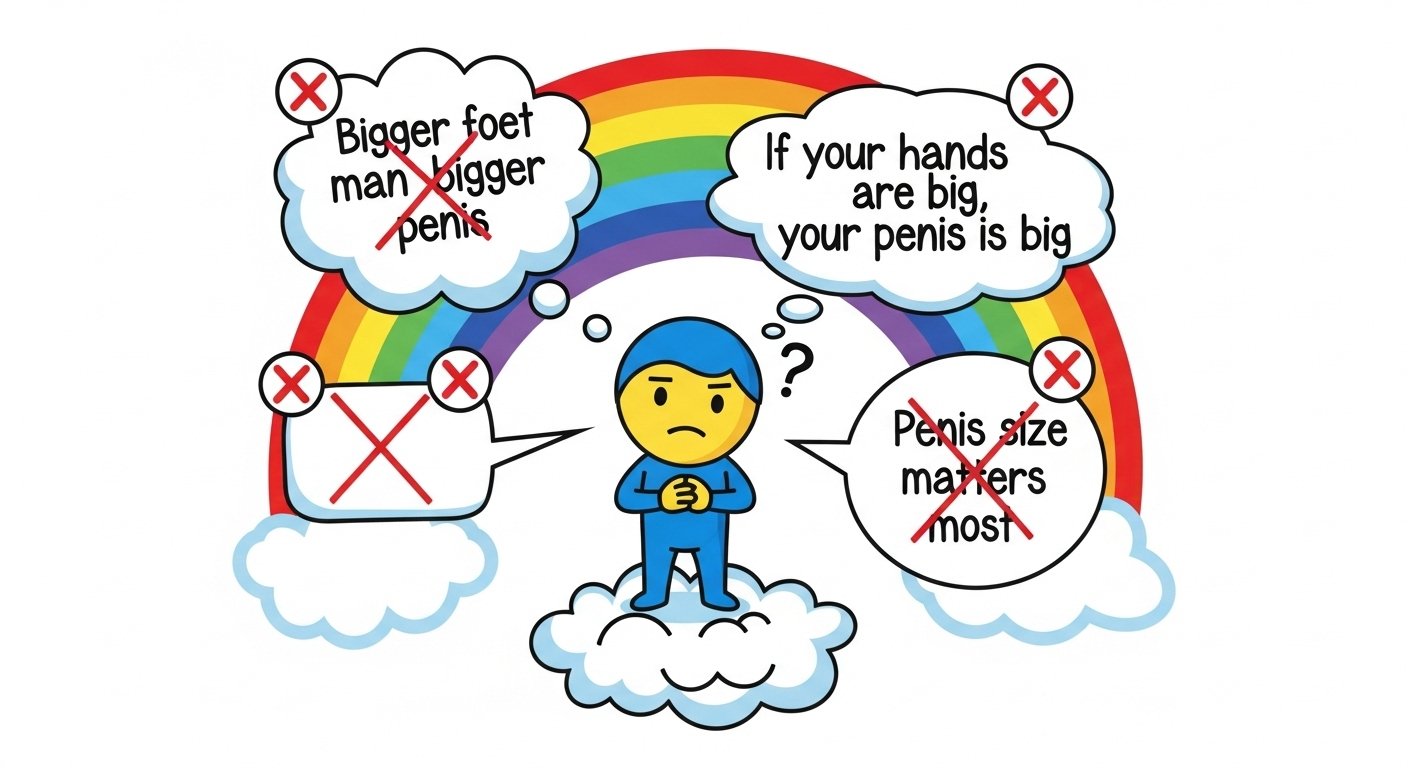
Myth 2: “Foot, hand or body-part size correlates with penis size”
One of the most common assumptions is that features like shoe size, hand size, or even nose shape can predict penis length. According to data from The Turek Clinic, there is no consistent or reliable correlation between these body parts and penis size. Studies across large populations have shown that such comparisons are largely coincidence and lack biological logic. This myth persists because people look for visible markers to estimate what cannot be easily seen, but science simply does not support the idea. Men should understand that genetics determine penis size independently of hand or foot dimensions, and relying on these old sayings only feeds insecurity without any truth behind it.
Myth 3: “Race, height or ethnicity determine penis size”
Another false belief is that race or ethnicity predicts penis size. Although some studies suggest a minor link between overall body height and penis length, The Turek Clinic confirms that racial and ethnic background does not reliably determine size. Global data sets show that averages differ slightly between groups, but the variations are too small to be meaningful. The persistence of this myth often comes from stereotypes and exaggerated media portrayals rather than biology. What men should know is that every group shows a wide range of sizes, and no race consistently ranks larger or smaller in credible medical research. Focusing on race-based assumptions distracts from more important aspects like health and confidence.
Myth 4: “Penis size remains constant for life”
Many men assume that their penis size will stay the same throughout life, but that is not accurate. Findings from Vertica® and similar studies show that size can change over time due to age, health, weight gain, and blood flow quality. As men age, reduced testosterone and elasticity in tissues may slightly decrease length or girth. Excess abdominal fat can also make the penis appear smaller by covering part of the base. These changes are normal and often reversible with lifestyle adjustments. The myth persists because few people discuss these natural variations openly. Men should know that maintaining overall health, including fitness and good circulation, can help preserve normal function and appearance.
Myth 5: “There’s one ideal size for all partners”
The idea of a universal “perfect size” is entirely false. Partner preferences vary widely, and sexual satisfaction depends on many factors besides size. Studies show that most women prioritize comfort, emotional connection, and mutual pleasure rather than a specific measurement. For some, an overly large penis can even cause discomfort or pain. This myth survives because people seek absolute answers about what is “best,” but human attraction and compatibility are far too diverse for a single standard. What men should know is that pleasing a partner involves communication, sensitivity, and understanding, not trying to meet a mythical ideal that doesn’t exist in reality.
Myth 6: “You can reliably enlarge your penis with pills, supplements or non-medical devices”
The market is filled with pills, pumps, and topical creams claiming to permanently enlarge the penis, but Live Science reports that most of these lack credible evidence and can even cause harm. The majority of over-the-counter products rely on unverified testimonials rather than clinical data. Some devices, like vacuum pumps, may create temporary swelling but no permanent change. More invasive methods, such as injections or surgery, carry significant risks, including scarring and nerve damage. This myth continues because it preys on men’s insecurities and promises quick fixes. What men should know is that medical professionals rarely recommend these methods except in verified medical conditions like micropenis, where treatment is supervised and evidence-based.
Myth 7: “If I have a ‘normal’ size I shouldn’t worry; if it’s smaller I have to fix it immediately”
This myth creates unnecessary panic for men who fall slightly below perceived norms. Live Science confirms that the vast majority of men, over 90%, are within a typical range and have no functional issue. Worry often stems from distorted perception rather than any real abnormality. Even men with smaller sizes can have fully satisfying sexual lives. The anxiety around “fixing” something that isn’t broken leads to mental distress and risky behaviors such as trying unsafe enlargement methods. What men should know is that confidence, emotional connection, and communication matter far more for pleasure and relationships. Accepting one’s body as normal can dramatically improve sexual and emotional well-being.
What Science Really Tells Us About Penis Size and Sexual Health
Typical size ranges globally & variation (flaccid, stretched, erect)
Scientific research across more than 15,000 men worldwide shows that the average erect penis length ranges between 5.1 to 5.5 inches (13–14 cm), while the average circumference is about 4.5 inches (11.6 cm). The flaccid length typically measures between 3.3 to 3.6 inches (8.5–9.1 cm), depending on temperature and arousal. The stretched length, used in many clinical settings, correlates closely with the erect measurement. Variations occur naturally across individuals due to genetics, body composition, and hormonal levels. Understanding this range helps dispel the myth that there is a “normal” or “ideal” measurement. Most men fall well within these averages, and anything slightly above or below still functions perfectly for healthy sexual activity.
Relationship between penis size and sexual satisfaction – what research shows
Scientific studies have repeatedly shown that penis size is a poor predictor of sexual satisfaction. Both men and women report that emotional closeness, arousal, and communication play much larger roles. Research published by sexual health experts found that only a small percentage of women rate size as a significant factor in pleasure. More often, rhythm, connection, and mutual understanding contribute to better experiences. This misconception endures because of cultural messaging equating masculinity with physical size. In truth, satisfaction involves multiple factors, physical and emotional, that have little to do with measurements. By understanding this, men can focus on what actually enhances intimacy rather than worrying about unrealistic expectations.
Other key determinants of sexual satisfaction (erection firmness, stamina, emotional connection, communication)
Penis size is only one aspect of sexual function, and often not the most important. Elements such as erection firmness, stamina, and emotional connection define the overall quality of intimacy. Open communication about desires, comfort, and boundaries can improve sexual relationships far more than physical attributes. Emotional security allows partners to relax and explore freely, which increases satisfaction for both. Physical health also influences performance, conditions like poor circulation, obesity, or stress can reduce erection quality. Men who prioritize overall wellness and relationship closeness experience more fulfilling sex lives. In short, focusing on function and connection creates a stronger, more rewarding sexual experience than fixating on size.
When size might matter medically (e.g., micropenis, medical conditions)
There are rare medical cases where penis size may have clinical importance. A condition known as micropenis is defined by an erect length of less than 2.8 inches (7 cm), usually caused by hormonal or developmental factors. In such instances, urologists can recommend evidence-based treatments such as hormone therapy or surgery. Other medical issues, including Peyronie’s disease (penile curvature) or severe erectile dysfunction, can affect function regardless of size. Men experiencing pain, curvature, or drastic shrinkage should consult a qualified healthcare provider rather than rely on online remedies. Recognizing when medical care is appropriate helps distinguish between myth-driven anxiety and genuine health concerns, promoting long-term sexual wellness and confidence.
Why Myths Persist – Cultural, Psychological and Commercial Drivers
Even though modern research has disproved many penis-size myths, these false beliefs remain deeply rooted in male culture. Several social and psychological factors keep these misconceptions alive, ranging from media influence to commercial exploitation. Understanding why these myths persist helps men recognize how external pressures shape their thoughts and encourages them to focus on genuine well-being instead of comparison or unrealistic ideals.
The role of pornography, media and advertising in distorting expectations
Pornography and popular media often present extreme examples that distort the public’s understanding of what a “normal” penis looks like. In adult films, performers are selected partly for their size, not because they represent an average man. Repeated exposure to these visuals leads viewers to assume such proportions are standard. Similarly, advertising and men’s magazines promote “bigger equals better” messages, linking size with confidence, masculinity, and success. These constant reminders reinforce insecurity and fuel myths about inadequacy. Men start comparing themselves to unrealistic examples, which damages self-esteem. Recognizing that these images are staged, edited, and far from typical allows men to separate entertainment from reality and develop a healthier perception of their own bodies.
Social comparisons, “locker room talk” and male body image pressures
Male environments often include competitive or joking conversations about size, sometimes called “locker room talk.” While these comments might seem harmless, they create strong social pressure to measure up. According to Wikipedia, some men develop what psychologists describe as small penis syndrome, a form of body dysmorphic concern where they perceive themselves as smaller than average despite being within normal range. This anxiety can lead to performance issues, avoidance of intimacy, and depression. Social comparison is a natural human tendency, but constant competition in male circles exaggerates insecurity. Addressing these issues requires open discussion, education, and reassurance that confidence and connection matter far more than anatomy.
Commercial exploitation – enlargement devices, pills, cosmetic procedures
The commercial market profits heavily from men’s insecurities. From online ads to late-night infomercials, companies promote pills, pumps, and surgeries promising permanent enlargement. Yet medical experts confirm that most of these claims lack scientific proof and may carry serious risks. Pills often contain unregulated ingredients, while devices can damage tissues when misused. Cosmetic procedures, such as fat injections or ligament cuts, can cause scarring and loss of function. These industries exploit fear and comparison, offering false hope to those seeking reassurance. Understanding this manipulation helps men resist marketing pressure and focus on safe, evidence-based care through licensed healthcare professionals rather than quick-fix solutions.
The cost of myths: anxiety, relationship issues, unnecessary or invasive treatments
Believing false information about penis size can have lasting consequences. Anxiety about being “too small” may lead to avoidance of sexual intimacy or difficulty maintaining relationships. Many men experience unnecessary distress or spend large amounts of money on ineffective products. Some even undergo painful procedures that provide minimal benefit and long-term complications. These actions often stem from low self-worth rather than genuine medical problems. The emotional burden extends to partners, who may feel pressure to reassure or validate these fears. Breaking free from myths helps men redirect focus toward communication, pleasure, and confidence, creating healthier, more satisfying relationships without the shadow of comparison or shame.
Practical Advice for Men and Their Partners
Understanding the truth about penis size is only part of the journey. Applying that knowledge in daily life, especially within relationships, helps men and their partners build intimacy without insecurity. The following sections offer practical ways to strengthen confidence, improve communication, and maintain sexual and emotional health.
How to talk about penis size with your partner: openness, focusing on pleasure and communication
Conversations about penis size should be honest but supportive. Many couples avoid the topic out of fear or embarrassment, yet open communication strengthens trust. Men can share their concerns without shame, while partners should respond with empathy rather than judgment. Using tools like a Cock Size Calculator can help men understand what’s average and separate facts from myths, reducing unnecessary anxiety. Focusing on mutual pleasure, emotional closeness, and sexual techniques helps both partners move away from physical comparisons. Discussing preferences, comfort, and fantasies often reveals that size plays a much smaller role than assumed. Creating a safe environment for these talks allows couples to address insecurity and strengthen their bond. Confidence grows when both partners feel heard and valued for more than just physical traits.
When to worry and when it’s likely “normal” , signs to consult a urologist (erectile dysfunction, penile curvature, micropenis, etc)
Most men fall within normal size ranges and have no reason for concern. However, medical consultation is important if certain symptoms appear. These include erectile dysfunction, severe penile curvature (as seen in Peyronie’s disease), pain during erection, or significantly reduced size that affects function. In rare cases, conditions like micropenis, defined by an erect length under 2.8 inches (7 cm), may require evaluation. Urologists can determine whether issues are anatomical, hormonal, or psychological. Seeking professional advice ensures that treatment is safe and based on evidence. Ignoring symptoms or relying on unverified remedies may worsen the condition, so timely medical guidance provides reassurance and effective care.
Lifestyle, health & confidence factors that actually matter: weight management, cardiovascular health, smoking, stress
Penis size is less important than the overall health that supports sexual function. Factors such as blood flow, nerve sensitivity, and testosterone levels depend on lifestyle habits. Maintaining a healthy weight reduces fat around the pubic area, which can make the penis appear longer. Regular exercise improves circulation and stamina, while avoiding smoking and excess alcohol protects erectile health. Chronic stress and poor sleep can also harm performance. Men who prioritize balanced nutrition, consistent activity, and relaxation tend to experience stronger erections and better confidence. These improvements come naturally from self-care, showing that true sexual health begins with everyday habits, not enlargement fads or comparisons.
How to accept and appreciate your body: mindset shifts, self-esteem, therapy if needed
Building body confidence starts with changing how one thinks about appearance. Instead of focusing on comparison, men should recognize what their bodies can do rather than how they measure up. Positive self-talk, mindfulness, and gratitude for health can shift attention from size anxiety to overall satisfaction. For persistent insecurities, therapy, especially cognitive behavioral therapy (CBT), can help challenge distorted beliefs and improve self-esteem. Acceptance does not mean ignoring areas of improvement but appreciating one’s worth beyond physical traits. With time, men can form healthier relationships with their bodies, improving both mental and sexual well-being through understanding and self-respect.
How partners can support and overcome size-based insecurities in the relationship
Partners play a key role in helping men overcome size-related worries. Honest reassurance and consistent emotional support create security and intimacy. Instead of focusing on comparisons, couples can explore shared pleasure, open dialogue, and experimentation that emphasizes mutual satisfaction. Encouraging body positivity benefits both partners and strengthens emotional bonds. It’s also helpful for partners to avoid humor or comments that could reinforce insecurity. By working together, couples can transform this sensitive topic into an opportunity for closeness. A relationship grounded in empathy, understanding, and connection fosters confidence that goes far beyond physical appearance.
Key Takeaways & Summary
Recap of major myths and the truth behind them
Most myths about penis size, whether about correlation with foot size, race, or sexual satisfaction, are false. Research shows that average erect length is around 5.1–5.5 inches, and size rarely affects pleasure or performance. What truly matters are factors such as communication, health, and emotional connection. Men should remember that pornography and commercial messages often distort expectations, while real intimacy thrives on trust and understanding. Dispelling these myths helps reduce anxiety, prevent harmful behaviors, and promote better sexual and emotional health.
Final reassurance: size is just one piece; functional health, emotional connection and realistic expectations matter far more
Penis size does not define masculinity, worth, or ability to satisfy a partner. Real satisfaction comes from affection, understanding, and communication. A healthy lifestyle and emotional confidence improve sexual function far more than any supplement or surgery. Men who accept their normal variations experience stronger relationships and self-esteem. By focusing on function, pleasure, and connection instead of measurements, individuals can achieve fulfilling intimacy free from unnecessary pressure or comparison.
If you’re anxious about size or performance talk with a qualified healthcare provider; avoid quick-fix claims
Anyone experiencing distress or persistent doubts about size should reach out to a healthcare professional, preferably a urologist or certified sex therapist. They can provide evidence-based guidance and rule out medical concerns. Avoid products or online offers that promise instant results, these are often scams that can cause harm. Genuine reassurance and treatment come from medical experts, not advertisements. Taking that step shows strength and self-awareness, helping men move beyond insecurity and focus on real solutions that enhance both physical and emotional well-being.
Frequently Asked Questions (FAQs)
What is the average penis size for adult men?
The average erect penis length is between 5.1–5.5 inches (13–14 cm) with a circumference of around 4.5 inches (11.6 cm). These averages come from global research covering thousands of participants.
Does penis size affect sexual performance?
No. Performance is determined by blood flow, arousal, stamina, and communication, not by length. Emotional connection and technique play far greater roles in satisfaction.
Can I increase my penis size safely and permanently?
Permanent enlargement is rare outside of medically supervised procedures. Pills, pumps, and creams rarely work and can cause harm. Always consult a healthcare professional before considering any treatment.
How accurate are claims linking foot or hand size to penis size?
Such claims are myths. Studies show no reliable correlation between penis size and other body parts like feet or hands. These comparisons persist only through social assumptions.
When should I see a doctor about penis size or function?
Consult a doctor if you experience pain, severe curvature, erection difficulties, or significant changes in size. These may signal underlying health issues that need evaluation.
What can I do if I’m worried about my penis size or self-image?
Focus on overall health, communication with your partner, and self-acceptance. If anxiety continues, therapy can help challenge harmful thoughts and build lasting confidence.