icon

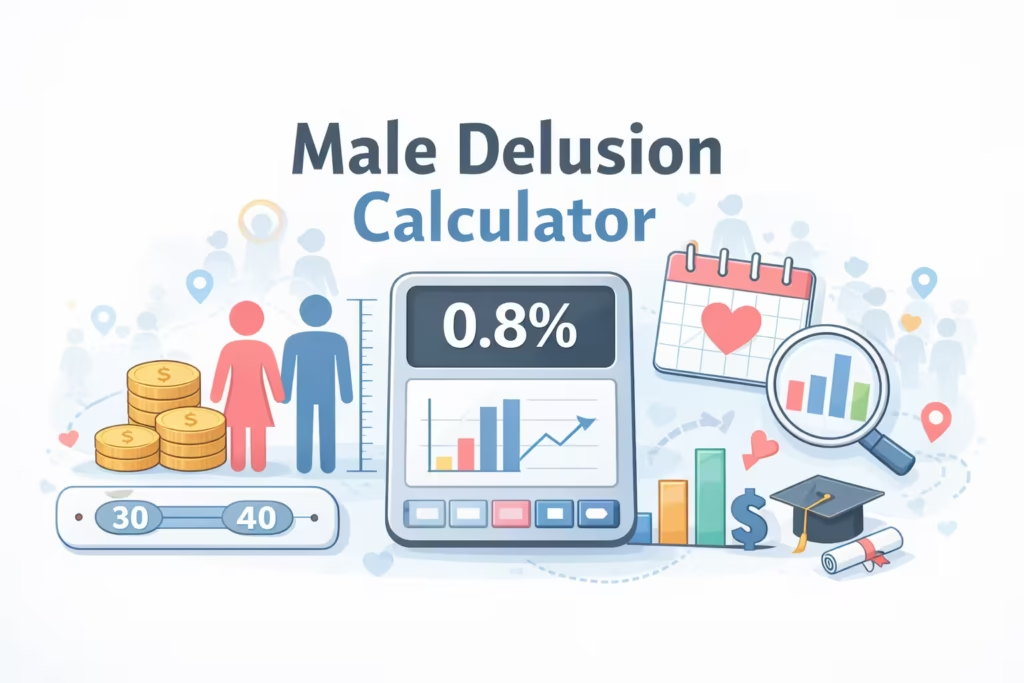
Male Delusion Calculator

Dating standards often feel reasonable in isolation, yet become rare when combined. This calculator uses demographic estimates to show how selected preferences affect the size of the potential dating pool, helping place expectations in population context.

Male Delusion Calculator

Discover what percentage of women meet your standards based on real statistical data

👤 Target Gender
🎂 Age Preferences
Min Age: 22
Max Age: 35
📏 Physical Preferences
Height: 5'5"
💍 Relationship Preferences
💰 Financial Preferences
Income: $50,000
🎓 Education Preferences
🌍 Ethnicity Preferences
0%
of women meet your standards

📊 Breakdown by Category

💡 Recommendations

📚 Important Notes

ℹ️ This calculator uses statistical data from U.S. Census Bureau and various demographic studies.
📈 Results are estimates based on population averages and may not reflect local demographics.
🎯 Consider that compatibility involves many factors beyond these basic criteria.
💭 Use this tool for self-reflection, not as absolute truth about dating prospects.
⚠️ DISCLAIMER: This calculator is for entertainment and educational purposes only. Results are based on statistical estimates and should not be used to make serious life decisions. Real relationships are built on compatibility, shared values, and mutual respect - factors that cannot be quantified. Data sources include U.S. Census Bureau, Bureau of Labor Statistics, and various demographic studies. Individual results may vary significantly based on location, social circles, and personal circumstances.

The Statistical Reality Behind Modern Dating Standards

Dating frustration is often framed as personal failure, poor choices, or lack of effort. Yet population data points to a quieter explanation: many modern dating standards collide with basic demographic limits. Preferences that feel ordinary in daily conversation, certain incomes, heights, education levels, or age ranges, are statistically uncommon when combined. This mismatch creates confusion, disappointment, and unrealistic timelines, especially in app-driven dating environments. Understanding the statistical shape of dating markets does not reduce human connection to numbers; it clarifies why so many people feel stuck despite strong intentions. By looking at census data, income distributions, and population patterns, this discussion aims to ground dating expectations in measurable reality, replacing vague frustration with clearer perspective and informed choice.

Farm efficiency isn’t just about having powerful machinery, it’s about knowing how effectively that machinery operates. This includes understanding how speed, implement width, and field efficiency influence your actual working capacity. Our calculator provides these insights instantly. With CalcViva’s focus on accuracy, simplicity, and real-world applications, the tool becomes more than just a number cruncher. It’s a field planning solution. Read on to explore how to use the tool, the formulas it uses, how different machine types affect output, and why accurate acre-per-hour calculations matter more than ever in today’s precision farming.

Why Personal Dating Preferences Often Conflict With Population-Level Demographics

Individual preferences form through lived experience, social exposure, and cultural signals, not population averages. People often assume that traits common in their environment are common everywhere. In reality, cities, social circles, and online platforms concentrate specific demographics, creating a narrow sample mistaken for the whole population. National data tells a different story. Income clusters around the median, height follows tight bell curves, and marital status shifts sharply with age. When preferences are shaped by localized exposure but applied to a national or global pool, conflict arises. This disconnect explains why many people perceive dating as broken while demographic trends remain stable. The issue is not desire itself, but scale.

Male Delusion Calculator

Local Exposure Versus National Reality

A frequent source of misjudgment is relying on social comparison. If most peers share similar education or income, it feels normal to expect the same from partners. Population data shows otherwise.

Examples of demographic gaps:

  • Median income differs sharply from visible earners

  • Urban samples skew younger and more educated

  • Single, child-free adults decline rapidly after early thirties

These gaps explain why personal expectations often exceed demographic supply without intent or awareness.

The Math of Modern Dating

How Online Dating Platforms Distort Perceptions of Rarity and Availability

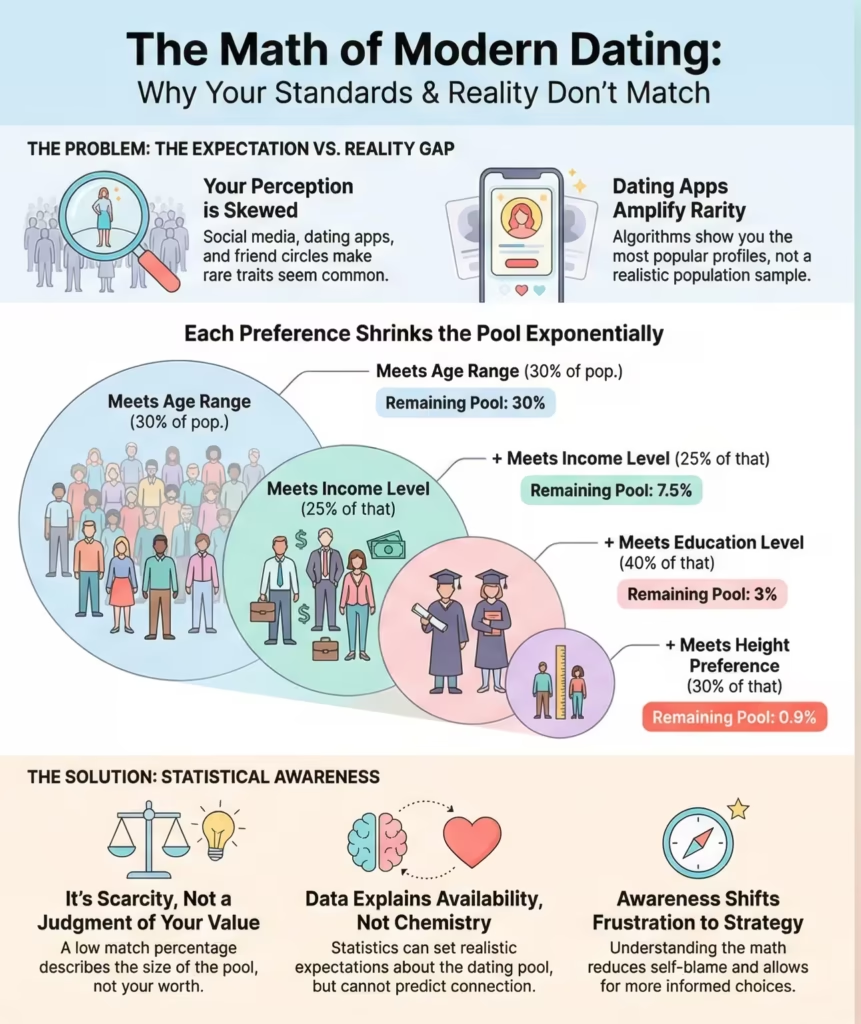
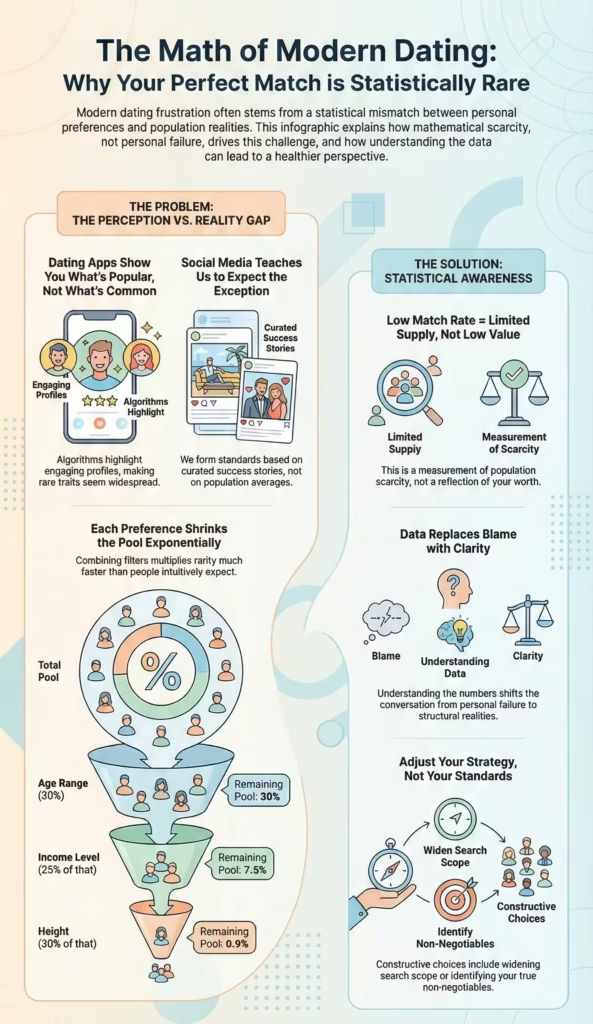
Dating apps reshape perception by ranking people, not representing populations. Algorithms highlight profiles with higher engagement, often reinforcing traits already in demand. Over time, users repeatedly see the same narrow set of attributes, which creates the illusion that these traits are widespread. This exposure bias affects expectations even when users understand, in theory, that apps are filtered systems. The result is a loop where rare traits feel normal because they are repeatedly surfaced. This distortion does not require manipulation or bad intent; it follows basic engagement logic. Still, it has lasting effects on how people judge availability and competition.

Algorithmic Visibility and Selection Bias

Algorithms favor profiles that trigger interaction, not demographic balance. This creates a feedback cycle.

Common distortions include:

  • Overexposure to high earners

  • Overrepresentation of taller profiles

  • Youth skew due to swipe behavior

  • Education bias in urban markets

Platform EffectPopulation Impact
Ranking by likesRare traits appear common
Swipe filteringAverage profiles disappear
Urban densityLocal norms replace national reality

The Mathematics of Preference Stacking and Exponential Scarcity in Dating Pools

Each dating preference reduces the available pool. While individual filters seem reasonable, their combined effect is rarely intuitive. Probability works multiplicatively, not additively. A preference that applies to 40% of people followed by one that applies to 25% does not leave 65%. It leaves 10%. Add more criteria, and scarcity accelerates quickly. This mathematical effect explains why people with clear, high standards often face long search times without doing anything wrong. Scarcity is a numeric outcome, not a moral judgment.

Why Small Filters Create Large Reductions

Stacking preferences compounds rarity faster than expected.

Illustrative example:

CriteriaRemaining Pool
Age range (30%)30%
Income level (25%)7.5%
Education (40%)3%
Height (30%)0.9%

Understanding this pattern helps explain why results feel surprising yet consistent.

Height, Income, Age, and Education: How Individually Common Traits Become Collectively Rare

Each commonly discussed trait has a clear population distribution. Height clusters around averages, income follows a steep curve, and advanced education represents a minority. Age further narrows availability as marriage and children increase over time. Individually, none of these traits appear extreme. Collectively, they form a narrow slice of the population. The issue arises when people assume that common conversation topics reflect common outcomes. Data shows that overlap between these traits is limited, especially outside major cities.

Distribution Patterns That Shape Availability

Key population facts explain scarcity:

  • Most adults earn near the median, not six figures

  • Extreme height percentiles are small

  • Bachelor’s degrees are not universal

  • Single status declines with age

These distributions interact, not overlap evenly.

Gender-Based Asymmetries in Dating Preferences and Their Demographic Consequences

Dating preferences are not evenly distributed across genders, and data reflects consistent asymmetries. Men and women tend to emphasize different traits, influenced by biology, culture, and economic history. These patterns matter because they shape competition. When a large group selects from a smaller subset, imbalance follows. This is not about blame; it is about demand concentration. Understanding these asymmetries explains why frustration can be widespread even when intentions are reasonable.

How Asymmetric Demand Shapes Outcomes

Observed trends across datasets include:

  • Height and income emphasized more often in male partners

  • Age and physical appearance emphasized more often in female partners

  • Education gaining importance with age for both

When many people prefer the same narrow traits, scarcity becomes shared.

The Influence of Cultural Narratives and Social Media on Perceived Dating Norms

Cultural messaging strongly shapes what feels normal. Social media highlights success stories, attractive couples, and exceptional lifestyles while hiding averages. Over time, this shifts expectations upward without clear reference points. Narratives about rapid success, perfect compatibility, and high achievement reinforce the idea that exceptional outcomes are standard milestones. These signals are repeated often enough to feel factual. Yet demographic data does not change at the same pace as cultural messaging. The gap between narrative and reality grows quietly.

Visibility Bias and Expectation Inflation

Cultural signals influence perception through repetition.

Common narrative drivers:

  • Influencer lifestyles

  • Curated relationship stories

  • Career success timelines

  • Selective sharing habits

These signals shape expectations faster than population trends can support.

Why Perfect Matches Are Rare

Dating Concept or Metric

Statistical Impact

Population Reality

Perception Distortion Factor

Suggested Strategy

Inferred Societal Outcome

Preference Stacking

Reduces availability exponentially as probability works multiplicatively, not additively.

Each preference (age, income, height) compounds rarity; four standard filters can leave <1% of the population.

Individual filters seem reasonable in isolation, masking the collective scarcity they create.

Identify core versus optional preferences and prioritise fewer non-negotiable traits.

Increased dating frustration and prolonged search times for individuals with high standard density.

Demographic Distribution (Income/Height)

Most adults cluster around the median; extreme percentiles are numerically small.

Six-figure incomes and extreme height percentiles represent a narrow minority of the total pool.

Social media and urban samples concentrate specific demographics, mistaken for national wholes.

Widen geographic scope and align expectations with measurable census data distributions.

A growing gap between aspirational standards shaped by media and the actual availability of partners.

Algorithmic Visibility

Algorithms rank profiles based on engagement rather than representing population balance.

Rare traits (high earners, specific heights) are over-represented due to selection bias.

Exposure bias creates an illusion that exceptional traits are widespread and normal.

Reduce reliance on app-based exposure alone to regain a realistic sense of population averages.

Skewed market expectations where average profiles become invisible to the majority of users.

Low Match Percentages

Reflects population scarcity (e.g. 0.5% or 1%) rather than personal failure.

A small pool indicates higher competition and longer timelines, not impossibility of connection.

Numbers are interpreted as emotional evaluations or personal rejections rather than measurements.

Remove shame from the process by treating statistics as clarification tools rather than personal verdicts.

Reduced self-blame and healthier public discourse regarding modern dating difficulties.

Gender-Based Asymmetries

Imbalance follows when large groups select from the same small subset of traits.

Demand is concentrated on specific traits (height/income for men, age/appearance for women).

Frustration is often framed as social decline rather than a result of asymmetric demand.

Allow for longer time horizons and recognise that scarcity is often shared across groups.

Increased hostility between genders due to lack of awareness regarding structural constraints.

Interpreting Extremely Low Match Percentages Without Moral or Personal Judgment

Low match percentages often trigger emotional reactions because numbers feel like evaluations rather than measurements. In dating contexts, a result such as 1% or 0.5% can sound like rejection, even though it reflects population scarcity rather than personal worth. These figures describe how many people statistically meet a set of filters, not how likely a connection is with any one individual. A small pool means higher competition and longer search times, not impossibility. Interpreting these numbers correctly helps remove shame and defensiveness from dating discussions. Scarcity exists in many areas of life, from housing markets to job roles, without implying failure. Dating operates under similar constraints, shaped by math rather than morality.

Key reframing points:

  • Low percentage = limited supply, not low value

  • Scarcity affects timing more than outcomes

  • Numbers describe pools, not people

What Demographic and Census Data Can and Cannot Explain About Human Relationships

Demographic data excels at describing structure but falls short in predicting connection. Census and survey statistics can measure age distribution, income ranges, education levels, and marital status with high accuracy. These metrics help explain why certain preferences narrow the dating pool. However, they cannot capture interpersonal dynamics such as attraction, shared humor, emotional safety, or long-term compatibility. Data explains availability, not chemistry. Confusion arises when people expect population statistics to predict personal outcomes. The value of demographic analysis lies in setting realistic expectations about scale, not in forecasting relationship success. Understanding both the power and the limits of data prevents misuse and overinterpretation.

What Data ExplainsWhat Data Cannot Explain
Population sizeEmotional connection
Trait distributionMutual attraction
Scarcity patternsRelationship quality
Competition densityPersonal timing

Why Statistical Awareness Matters in Conversations About Modern Dating Frustration

Dating frustration is often personalized, framed as individual failure or social decline. Statistical awareness shifts the conversation from blame to structure. When people understand how preference stacking reduces availability, frustration becomes easier to contextualize. This perspective lowers hostility, reduces gender-based accusations, and supports more constructive dialogue. Without data, people fill gaps with assumptions shaped by anecdote and social media. With data, patterns replace speculation. This does not remove disappointment, but it reduces confusion. Awareness helps people adjust expectations, timelines, or search strategies without feeling pressured to abandon standards. In this sense, statistics act as clarification tools rather than verdicts.

Benefits of statistical awareness include:

  • Reduced self-blame

  • Clearer understanding of competition

  • More grounded expectations

  • Healthier public discourse

Understanding the Gap Between Aspirational Standards and Population Reality

Aspirational standards reflect values, goals, and identity. Population reality reflects distribution and probability. The gap between the two widens when aspiration is shaped by visible exceptions rather than averages. Many people aim for outcomes modeled by media, peers, or online examples without realizing how narrow those outcomes are statistically. This gap does not mean aspirations are wrong; it means they carry costs. Longer searches, geographic limits, and higher competition are natural consequences. Problems arise only when this gap is invisible. Clarity allows choice. People can hold high standards while understanding the trade-offs involved, rather than experiencing repeated surprise.

Common causes of the gap:

  • Overexposure to exceptional cases

  • Underexposure to averages

  • Confusing desirability with availability

Suggestions: Dating Expectations in an Era of Algorithmic Visibility and Demographic Constraint

Modern dating operates within systems that amplify rarity and compress perspective. Adjusting expectations does not require lowering standards, but it does benefit from awareness. Practical responses include widening geographic scope, extending timelines, or prioritizing fewer non-negotiable traits. These are strategic choices, not compromises of self-respect. Algorithms will continue to highlight narrow segments of the population, and demographics will continue to limit overlap. Understanding both allows individuals to act deliberately rather than react emotionally. Dating outcomes improve when expectations align with structure, not when desire is abandoned.

Constructive adjustments may include:

  • Identifying core versus optional preferences

  • Allowing longer time horizons

  • Reducing reliance on app-based exposure alone

Frequently Asked Questions (FAQs)

1. Does a low percentage mean my standards are unrealistic?

No. A low percentage does not automatically mean your standards are unrealistic. It means that the combination of criteria you selected applies to a small portion of the population. Many reasonable preferences become rare when stacked together. The calculator highlights scarcity, not correctness. Whether standards are realistic depends on time horizon, location, and personal priorities, not on a single number.

2. Are these results accurate for my city or country?

The calculator uses national-level demographic estimates, primarily based on U.S. data. Local populations can differ significantly due to migration, urban density, and cultural factors. Large cities may increase access to certain traits, while smaller regions may reduce them. The results should be viewed as broad estimates rather than precise local measurements.

3. Why does changing one setting affect the result so much?

Each setting applies a percentage filter to the population. When one filter is tightened, it reduces the remaining pool that all other filters apply to. Because these reductions multiply, small changes can lead to large differences in results. This reflects how real-world availability shrinks as preferences become more specific.

4. Why are factors like personality or attraction not included?

Personality, attraction, and emotional compatibility cannot be measured reliably at a population level. The calculator focuses only on traits that have consistent demographic data. Its purpose is to estimate availability, not to predict relationship success or personal chemistry.

5. Is this calculator meant to tell people to lower their standards?

No. The calculator is not designed to instruct users on what they should value. It provides statistical context so users can make informed decisions. Some people may choose to adjust preferences, while others may accept longer timelines or smaller dating pools. Both responses are valid.