How I Use KD Ratio to Evaluate Gaming Skill
When I evaluate gaming performance using statistical data, the KD ratio serves as one of the first indicators I review. It provides a quick snapshot of how often a player wins combat engagements compared to how often they are eliminated. In many competitive shooters, this ratio reflects important aspects of gameplay such as mechanical precision, positioning choices, and reaction timing during encounters. For example, a player with strong aim control and fast reaction speed typically secures more eliminations while minimizing deaths, which naturally results in a higher KD ratio. In my analysis of player statistics across titles like Call of Duty: Warzone, Valorant, Apex Legends, PUBG Battlegrounds, Fortnite, and Counter-Strike 2, players with consistently high KD ratios often demonstrate better decision-making during fights.
Beyond raw combat ability, KD ratio also highlights broader gameplay habits. I frequently notice that players with strong KD values display improved map awareness, meaning they understand high-traffic areas, safe rotations, and potential enemy spawn locations. Positioning also plays a major role, since controlling sightlines and cover reduces the chance of being caught off guard. Survival strategy becomes equally important, as experienced players tend to disengage from low-probability fights and instead focus on engagements they can realistically win. This combination of decision-making, aim accuracy, and situational awareness often leads to greater combat efficiency over time.
However, I never rely on KD ratio alone when evaluating a player’s overall skill level. Many external factors influence match performance and statistical outcomes. For example, team coordination can significantly affect kill opportunities in squad-based modes. Game mode objectives, such as capturing zones or planting bombs, sometimes require players to prioritize strategic tasks rather than individual eliminations. Other variables like weapon balancing, match pacing, and skill-based matchmaking systems can also shape how frequently players encounter difficult opponents.
Because of these variables, I usually interpret KD ratio alongside other performance metrics that provide additional context. Some of the most useful statistics include:
Win rate to measure match success over time
Damage output per match to evaluate consistent combat impact
Accuracy percentage to assess mechanical precision
Headshot rate to analyze aim control and targeting skill
Objective participation to measure team contribution
When these statistics are analyzed together, they provide a much clearer understanding of a player’s strengths and weaknesses than KD ratio alone.
Strategies I Recommend for Improving KD Ratio
During my review of gameplay statistics and performance patterns across many FPS titles, I noticed that players who maintain strong KD ratios tend to follow a few consistent habits. These habits focus on mechanical skill development, situational awareness, and disciplined engagement decisions. Improving KD ratio rarely comes from one single change; instead, it results from several small adjustments that gradually increase combat efficiency and survival rate.
Improve Crosshair Placement
One of the first areas I examine when helping players improve their performance is crosshair placement. Many inexperienced players aim at the ground or keep their crosshair positioned too low, which forces them to adjust their aim every time an enemy appears. Maintaining consistent crosshair placement at head or chest level significantly reduces reaction time during encounters. This allows players to fire immediately when an opponent enters their line of sight. Over time, disciplined crosshair positioning can dramatically increase kill efficiency, especially in tactical shooters like Valorant and Counter-Strike 2, where reaction speed often determines the outcome of a duel.
Focus on Positioning
Positioning has a strong influence on survival and engagement control. Players who frequently move through open areas or expose themselves to multiple sightlines tend to experience higher death rates. Instead, I recommend using natural cover, elevated angles, and controlled sightlines that allow players to initiate fights on their own terms. Good positioning also makes it easier to disengage from unfavorable fights and rotate safely to new areas of the map.
Manage Engagements Carefully
High-level players rarely engage in every fight they encounter. During my analysis of professional gameplay and ranked matches, I often observe that experienced players carefully evaluate each situation before committing to combat. They prioritize high-probability eliminations, meaning they attack when they have advantages such as better positioning, higher ground, or superior weapon range. Avoiding unnecessary fights helps reduce deaths and preserves a stronger KD ratio across longer sessions.
Improve Map Awareness
Map awareness is another factor that frequently separates average players from advanced competitors. Understanding common rotation paths, spawn locations, and high-traffic zones allows players to anticipate enemy movement before fights occur. In battle royale games like Apex Legends, Warzone, and PUBG, this awareness also helps players plan safe rotations and avoid dangerous areas during late-game circles.
Practice Aim Training
Mechanical skill remains an essential component of combat performance. Regular aim training helps players improve tracking, flick accuracy, and target acquisition speed. Many professional players use practice tools or training modes to maintain consistent aim control. Popular aim training tools include:
Aim Lab
KovaaK’s FPS Aim Trainer
Valorant practice range
Counter-Strike aim maps
Regular practice with these tools can lead to noticeable improvements in accuracy, which directly influences KD ratio over time.
KD Ratio vs Other Gaming Performance Metrics
Although KD ratio remains one of the most recognized statistics in gaming culture, it represents only one dimension of player performance. In my experience analyzing competitive matches, several additional metrics help paint a more accurate picture of gameplay effectiveness. These statistics allow players to evaluate their overall contribution to the team and identify specific areas that require improvement.
Some of the most important metrics used in competitive gaming analytics include:
Win Rate – the percentage of matches won
Damage Per Match – total damage inflicted on opponents
Headshot Percentage – frequency of precision eliminations
Accuracy Rate – percentage of shots that successfully hit targets
Average Survival Time – how long a player remains alive during matches
Kill Participation – involvement in team eliminations
These statistics often reveal insights that KD ratio alone cannot provide. For example, a player might maintain a moderate KD ratio but still contribute heavily to the team through high damage output and strong objective play. Conversely, a player with a high KD ratio may struggle with teamwork or objective completion.
Professional esports analysts frequently combine multiple metrics to evaluate performance in tournaments and competitive leagues. By analyzing patterns across these indicators, teams can identify strategic weaknesses, refine gameplay strategies, and improve overall coordination.
Advanced KD Calculations and Target KD Goals
Another concept I frequently explore when analyzing player statistics is target KD calculation. Many players want to know how much effort is required to reach a specific performance goal, such as achieving a 2.0 KD ratio. Understanding these goals requires analyzing several variables related to a player’s existing statistics and average match performance.
To determine how many kills are needed to reach a specific KD ratio, I examine the following factors:
For example, if a player currently has 600 kills and 500 deaths, their KD ratio is 1.2. If their goal is to reach 2.0 KD, they must significantly increase their elimination count while minimizing additional deaths. By calculating the difference between the current KD and the desired KD, the player can estimate how many kills are required to reach that target.
These calculations help players set realistic expectations for improvement. Instead of focusing on a single match, players can evaluate performance trends over multiple sessions and adjust their strategies accordingly. For competitive players who actively track statistics, this type of analysis provides a clear roadmap for gradual performance growth.
Why KD Ratio Remains Important in Competitive Gaming
Despite the introduction of advanced analytics in modern gaming, KD ratio continues to remain one of the most recognizable statistics in multiplayer culture. It appears in player profiles, match summaries, and competitive leaderboards across a wide range of games. The reason for this continued relevance lies in the simplicity and clarity of the metric. Players can quickly understand what the ratio represents without needing detailed statistical knowledge.
Professional players, streamers, and analysts often reference KD ratio during tournaments and competitive broadcasts. Major esports competitions regularly highlight this statistic when discussing player performance. Examples include:
Call of Duty League (CDL)
Valorant Champions Tour (VCT)
PUBG Global Championship (PGC)
Apex Legends Global Series (ALGS)
During tournament analysis, commentators frequently compare player KD ratios to highlight strong performers or identify players who consistently win engagements. Although modern analytics now incorporate additional metrics such as damage output and utility usage, KD ratio remains a widely accepted indicator of combat efficiency.
Another reason for its popularity is accessibility. Even casual players can quickly calculate KD ratio using simple math or online calculators. This accessibility has helped KD ratio remain a central statistic in gaming communities for many years.
Frequently Asked Questions About KD Ratio
How do I calculate KD ratio?
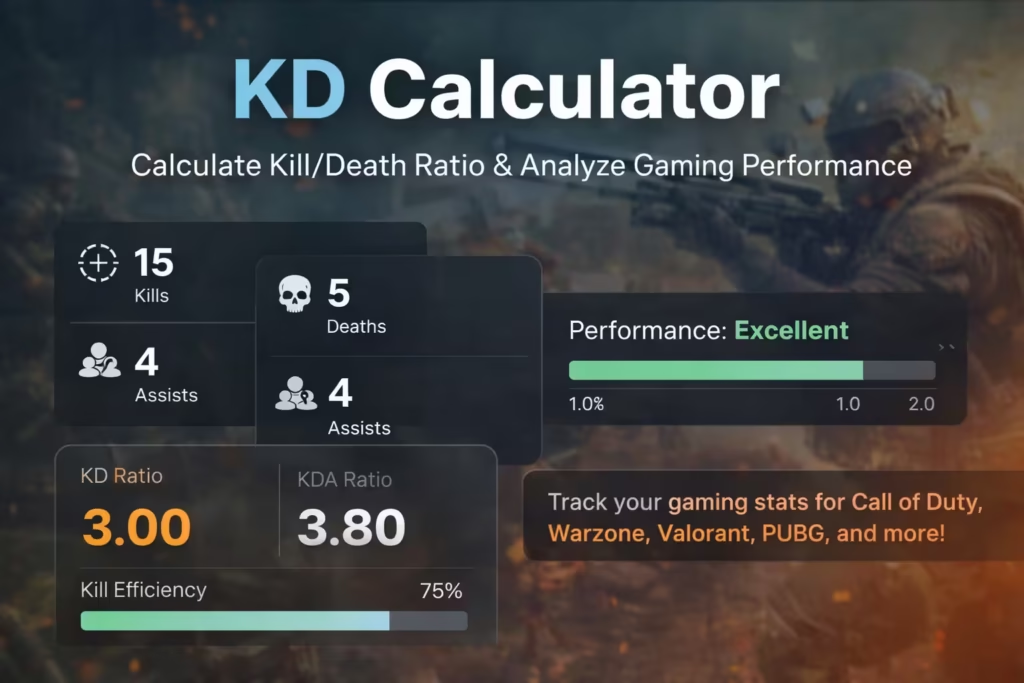
The KD ratio is calculated by dividing the number of kills by the number of deaths during gameplay. The formula is straightforward:
KD Ratio = Kills ÷ Deaths
For example, if a player records 30 kills and 10 deaths, the KD ratio becomes 3.0, meaning the player eliminates three opponents for every death.
Is a 1.0 KD good?
A 1.0 KD ratio indicates that a player eliminates one opponent for every death. In most multiplayer shooters, this is considered average performance. Players with KD ratios above 1.5 typically perform better than a large portion of the player base.
What is a high KD ratio?
In many FPS games, a KD ratio above 2.0 is considered highly skilled. Competitive players, professional streamers, and experienced gamers often maintain KD ratios above this level.
Does KD ratio matter in team games?
KD ratio still provides useful insight in team-based games, but it should always be considered alongside teamwork metrics such as assists, objective participation, and team coordination.
Final Thoughts on KD Ratio Analysis
Throughout my research on gaming statistics and competitive performance indicators, I have consistently found that the KD ratio remains one of the most effective ways to evaluate combat efficiency. Its simplicity makes it easy for players to track performance over time, while its relationship between eliminations and survival reveals important patterns in gameplay behavior.
However, KD ratio becomes even more valuable when combined with additional analytics such as KDA ratio, efficiency percentage, accuracy statistics, and objective performance. By studying these metrics together, players gain deeper insights into their strengths and areas that require improvement. Competitive gamers often use these statistics to refine their strategies, improve positioning, and make better decisions during engagements.