What Is the Formula for Converting Hourly Pay to Salary?
The formula used to convert hourly pay into salary is straightforward and widely accepted across industries. It is based on the idea that income equals pay per hour multiplied by time worked. Most calculators rely on standard work patterns, such as a 40-hour workweek and 52 weeks per year, but these values can be adjusted. The simplicity of the formula makes it reliable and easy to verify. While results are estimates, they are accurate enough for planning, comparison, and decision-making. Understanding the formula also helps users trust the calculator, as they can see exactly how each input affects the final salary numbers.
How Do You Calculate Annual Salary From Hourly Wages?
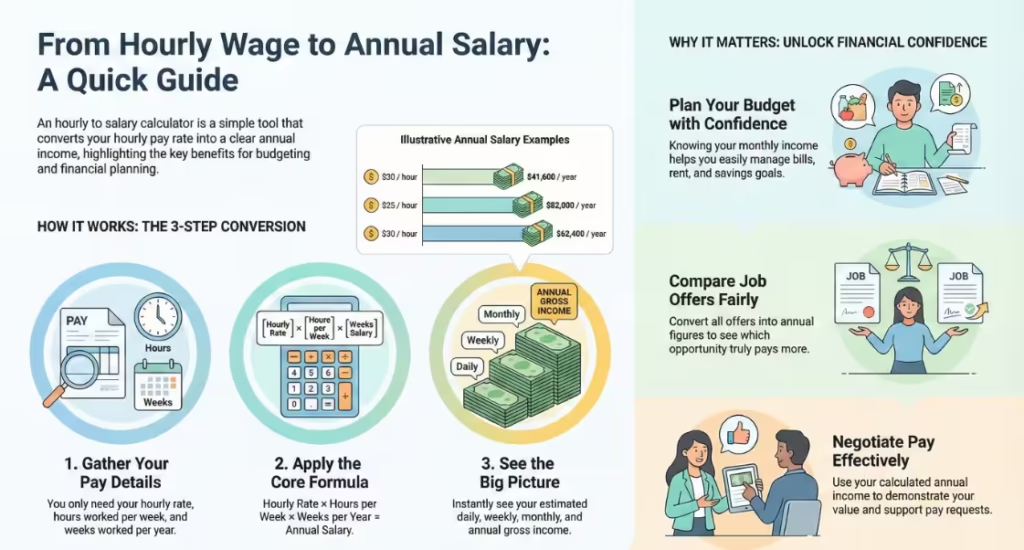
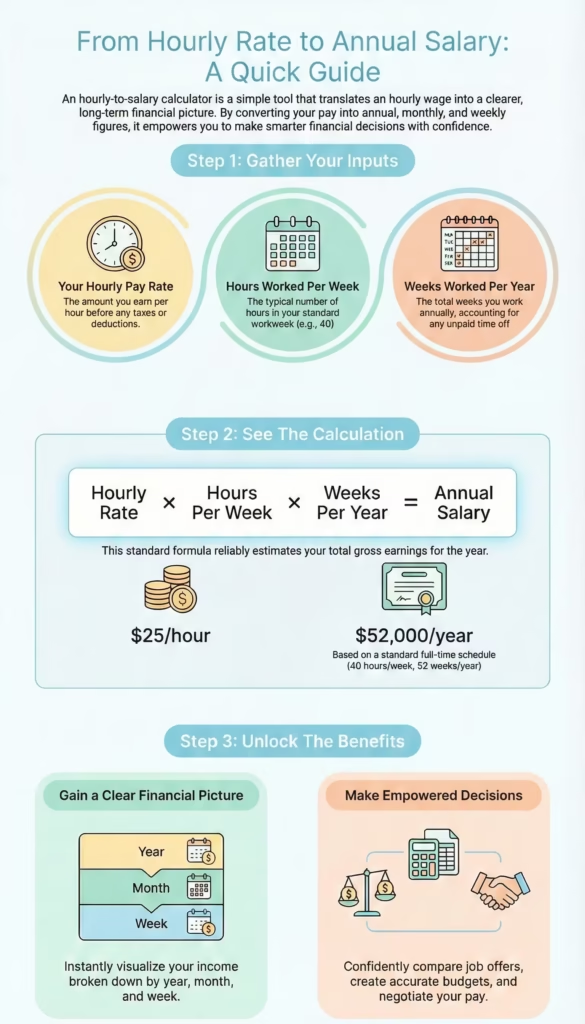
Annual salary is calculated by multiplying your hourly wage by the number of hours you work each week and then by the number of weeks you work in a year. The formula looks like this:
Hourly Rate × Hours per Week × Weeks per Year = Annual Salary
For example, if you earn $20 per hour, work 40 hours a week, and work 52 weeks a year, your annual salary is $41,600. This method assumes consistent hours throughout the year. If your schedule varies, adjusting the hours or weeks gives a more realistic estimate. This calculation is widely used by employers, payroll systems, and financial planners.
How Is Monthly Salary Calculated From Hourly Pay?
Monthly salary is calculated by taking your annual salary and dividing it by 12 months. This approach provides a stable monthly income estimate, even though most months do not have the same number of workdays. For example, an annual salary of $48,000 results in a monthly income of $4,000. This figure is especially helpful for budgeting, as rent, utilities, and subscriptions are usually paid monthly. While actual paychecks may vary slightly depending on payroll cycles, the monthly estimate offers a clear and practical way to plan regular expenses and savings goals.
How Do You Calculate Weekly and Daily Salary?
Weekly salary is calculated by multiplying your hourly rate by the number of hours you work each week. Daily salary is usually calculated by dividing weekly pay by the number of workdays, often five. For example:
Pay Type | Formula |
Weekly | Hourly Rate × Hours per Week |
Daily | Weekly Salary ÷ 5 |
These figures help workers understand short-term earnings and are useful for tracking time-off value, daily productivity, or short-term contracts. Weekly and daily estimates also help freelancers and contractors price their work more accurately.
How Much Is an Hourly Wage Per Year?
An hourly wage per year depends on how many hours and weeks you work. Two people with the same hourly rate can have very different annual incomes if their schedules differ. A full-time worker earning an hourly wage will usually work about 2,080 hours per year (40 hours × 52 weeks). Part-time workers will earn less annually even if their hourly pay is the same. This is why converting hourly pay into yearly salary is important. It gives context to the wage and helps compare it with salaried positions, financial goals, and cost-of-living requirements.
How Much Is $20 an Hour Per Year?
If you earn $20 per hour and work full time, your estimated yearly income is calculated as follows:
– $20 × 40 hours per week × 52 weeks = $41,600 per year
This breaks down to about $3,466 per month before taxes. This income level is common in many service, technical, and entry-level professional roles. While the hourly rate may seem modest, the yearly figure provides a clearer picture of what you can afford in terms of housing, transportation, and savings.
How Much Is $25 an Hour Per Year?
At $25 per hour with a full-time schedule, your estimated annual income would be:
– $25 × 40 × 52 = **$52,000 per year
This equals roughly $4,333 per month before deductions. Many skilled trades, healthcare roles, and mid-level positions fall into this range. Seeing the yearly figure helps workers evaluate job offers and understand how pay increases affect long-term income rather than just hourly changes.
How Much Is $30 an Hour Per Year?
Earning $30 per hour on a full-time schedule results in:
– $30 × 40 × 52 = **$62,400 per year
This translates to about $5,200 per month before taxes. This level of income is often associated with experienced professionals and specialized roles. Converting the hourly rate into a yearly figure helps clarify whether the pay aligns with lifestyle goals, financial responsibilities, and career expectations.
How Does Overtime Affect Hourly to Salary Calculations?
Overtime can significantly increase annual earnings, especially for workers who regularly exceed standard weekly hours. Most overtime policies pay a higher hourly rate for extra hours, often 1.5 times the normal wage. When included in a calculator, overtime shows how even a few extra hours each week can add thousands of dollars to yearly income. This feature is important for workers in healthcare, manufacturing, logistics, and emergency services. Without overtime calculations, salary estimates may appear lower than actual earnings, leading to inaccurate financial planning.
What Is Overtime Pay and How Is It Calculated?
Overtime pay is additional compensation for hours worked beyond a standard workweek, usually 40 hours. It is calculated by multiplying the hourly rate by an overtime multiplier, such as 1.5 or 2. For example, if your hourly rate is $20 and your overtime rate is 1.5, your overtime pay becomes $30 per hour. Only the extra hours are paid at this higher rate. Understanding how overtime is calculated helps workers verify paychecks and estimate income more accurately when schedules include extra hours.
How Much More Can You Earn With Overtime?
The extra income from overtime can be substantial over a year. For example, working just five overtime hours per week at time-and-a-half can add several thousand dollars annually. Here is a simple illustration:
Overtime Hours per Week | Extra Annual Income (Approx.) |
2 hours | $3,120 |
5 hours | $7,800 |
10 hours | $15,600 |
These figures show why overtime plays a major role in total earnings and why including it in salary calculations matters.
What Is the Difference Between Hourly Pay and Salary?
Hourly pay and salary represent two different compensation structures. Hourly workers are paid for each hour worked, while salaried employees receive a fixed annual amount regardless of hours. Hourly pay often offers flexibility and overtime eligibility, while salaried roles provide predictable income. Understanding the difference helps workers choose roles that match their lifestyle, income needs, and career goals. Neither option is better in all situations, which is why tools that convert hourly pay to salary are helpful for fair comparison.
What Are the Pros and Cons of Hourly Pay?
Hourly pay has clear advantages and drawbacks. Common benefits include:
– Pay for every hour worked
– Overtime eligibility
– Flexibility in scheduling
However, drawbacks may include:
– Income fluctuations
– Fewer paid benefits
– Unpaid time off in some roles
Hourly pay works well for people who want control over their schedules or earn extra through overtime, but it may require careful budgeting.
What Are the Pros and Cons of Salaried Jobs?
Salaried jobs offer stable income and often come with benefits such as paid leave and health coverage. Pros include:
– Predictable earnings
– Paid time off
– Benefits packages
Cons may include:
– No overtime pay
– Longer work hours
– Less flexibility
Understanding these trade-offs helps workers evaluate offers more realistically.
Which Is Better: Hourly or Salary?
The better option depends on personal goals, industry standards, and work habits. Hourly pay may suit those who value flexibility and overtime income, while salary may appeal to those who prefer stable, predictable earnings. Converting hourly wages into salary figures allows a fair comparison, helping workers decide which option supports their financial needs and lifestyle more effectively.
Who Should Use an Hourly to Salary Calculator?
An hourly to salary calculator is useful for a wide range of people because hourly pay is common across many industries and work arrangements. Anyone who earns money based on hours worked can benefit from understanding how that pay converts into weekly, monthly, or yearly income. Many financial decisions, such as renting a home, applying for loans, or planning savings, are based on annual figures rather than hourly wages. This calculator helps close that gap by translating hourly earnings into a clearer salary view. It is especially helpful for people whose work hours change, those comparing different job types, and anyone who wants a clearer picture of income over time instead of focusing only on short-term pay.
Is This Calculator Useful for Full-Time Employees?
Full-time employees often assume their income is easy to understand, yet hourly full-time workers still face uncertainty when comparing their earnings to salaried roles. This calculator helps full-time hourly employees convert their pay into an annual salary that matches how employers, lenders, and recruiters usually discuss income. It also helps show how overtime, unpaid leave, or reduced hours affect yearly earnings. By seeing income broken down into monthly and annual figures, full-time workers can budget more accurately, plan savings, and understand how raises or schedule changes impact long-term income rather than just weekly pay.
Can Part-Time Workers Use This Calculator?
Part-time workers benefit greatly from an hourly to salary calculator because their income often changes based on schedules, seasons, or availability. By entering actual hours worked per week and weeks worked per year, part-time employees can see a realistic estimate of their yearly income. This helps with planning expenses, managing multiple jobs, and deciding whether to increase hours or seek full-time work. Without this conversion, part-time workers may underestimate or overestimate their income, leading to poor financial planning. The calculator gives clarity and helps part-time earners stay in control of their finances.
Is This Calculator Helpful for Freelancers and Contractors?
Freelancers and contractors often charge hourly rates but need to think in yearly terms for taxes, savings, and business planning. An hourly to salary calculator helps them estimate what their current rate means over a year, even if work is not guaranteed every week. By adjusting hours and weeks, freelancers can model different workloads and see how gaps between projects affect income. This makes it easier to set realistic rates, plan emergency funds, and avoid underpricing services. The calculator also helps freelancers explain their earnings to banks or landlords who prefer annual income figures.
Can Job Seekers Use This Calculator to Compare Offers?
Job seekers often receive offers in different formats, such as hourly wages, annual salaries, or contract rates. An hourly to salary calculator makes comparisons fair and simple by converting all offers into similar yearly figures. This helps job seekers evaluate which option truly pays more, especially when overtime or fewer hours are involved. It also helps identify offers that seem attractive hourly but result in lower annual income due to limited hours. By using the calculator, job seekers can make decisions based on clear financial outcomes rather than assumptions or confusing pay structures.